Scroll through social media for five minutes, and it can feel as though every home project requires a new gadget. One tool promises perfectly straight shelves. Another claims to cut installation time in half. A third is marketed as something no homeowner should be without. The reality inside most homes looks very different.
When a kitchen cabinet starts sagging, a curtain pole comes loose, or a flat-pack wardrobe arrives in three intimidating boxes, people rarely reach for twenty different tools. Usually, the job gets done with the same handful of basics that have been around for decades. That is what makes building a home toolkit surprisingly difficult. The challenge isn’t figuring out what to buy. It’s figuring out what not to buy.
Start with the Tools That Solve Everyday Problems
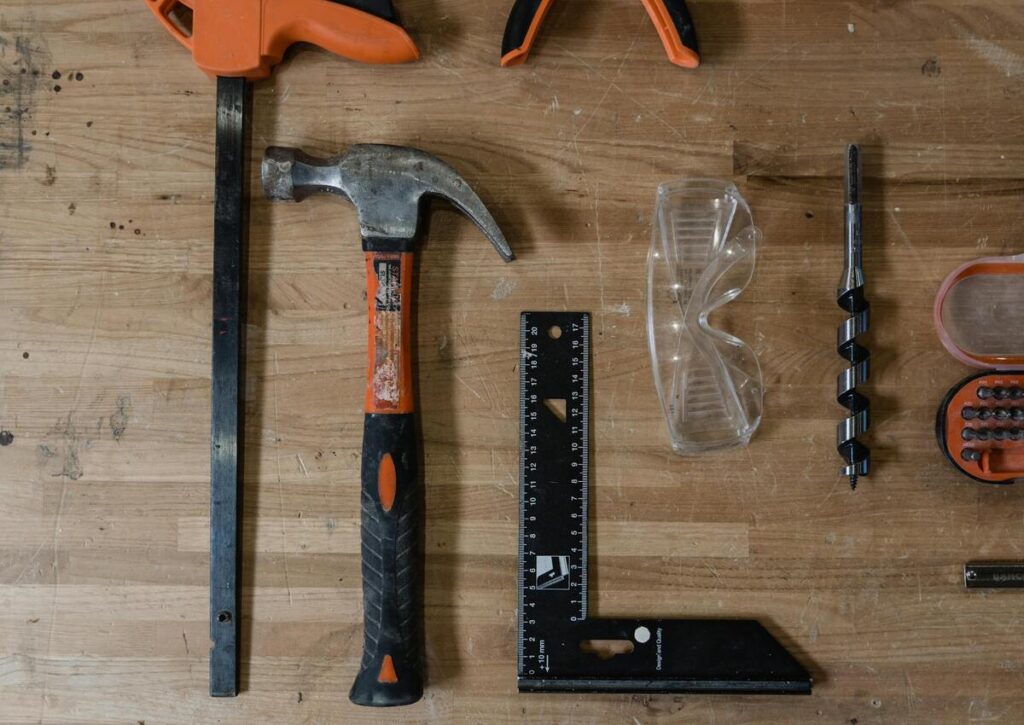
Having the correct tools is more important for a successful toolbox than having the most. The majority of daily activities, such as assembling furniture, installing shelves, and repairing loose fittings, may be completed with a tape measure, screwdriver set, and cordless drill. Many ordinary household repairs become much simpler when you have an adjustable wrench, spirit level, and hammer. These are the instruments that are frequently used, not the ones that look great on a store shelf.
The Part of the Shopping List People Skip
There is a pattern that appears in countless DIY projects. Money gets spent on the exciting equipment first. Safety gear is treated as something that can be picked up later. Later often never comes. Safety glasses are one of the simplest examples. They sit quietly in a drawer until the moment they are needed. The same applies to work gloves and dust masks. None of them feels particularly exciting when standing in a hardware store, but neither does dealing with an avoidable injury.
Ladders deserve similar attention. Almost everyone has attempted to reach a high corner using something that was never designed for the task. A chair, a stool, a stack of boxes. It usually works right up until it doesn’t. The National Safety Council continues to highlight falls as one of the most common causes of preventable injuries in the home. Some purchases don’t improve the project itself. They simply make sure the project ends safely.
Not Every Specialist Tool Is a Gimmick
Specialist tools often get a bad reputation because so many are marketed as miracle solutions. Some genuinely earn their place. Bathrooms provide a good example. Installing a new mirror or adding wall-mounted storage sounds straightforward until tile enters the equation. Many homeowners discover the hard way that ceramic tile and glass are far less forgiving than plasterboard.
Using the wrong drill bit can leave chips, cracks, or damaged surfaces before the installation has even begun. That’s why experienced DIYers often keep dedicated drill bits for tiles and glass on hand for these jobs. They are designed specifically for delicate materials where precision matters more than speed.
Other specialist tools follow the same logic. A moisture meter can help identify damp problems hidden behind paint. A stud finder can prevent unnecessary holes in walls. A voltage tester can provide reassurance before working near electrical fittings.
None of these tools gets daily use. Their value comes from preventing expensive mistakes.
The Things That End Up Forgotten
Most people can think of at least one purchase that seemed sensible at the time and then quietly disappeared into storage. Tool kits containing hundreds of pieces often fall into this category. They look comprehensive. They look professional. Yet after a year, only a small number of pieces tend to show signs of regular use.
The same happens with highly specialised gadgets designed to solve one very specific problem. They often perform exactly as advertised. The issue is that the problem rarely appears again. That doesn’t make them bad products. It simply makes them unnecessary for many households.
Before buying a new tool, it helps to ask a simple question: Is this solving a recurring problem or a one-off inconvenience?
A Toolkit That Grows Naturally
The most useful toolkits are rarely purchased in a single afternoon. They develop over time. A drill gets added after a decorating project. A stud finder appears after installing shelving. A specialist bit set arrives because a bathroom upgrade demands it. That gradual approach usually produces a better collection than buying everything at once. Each tool has a purpose. Each purchase solves a real need.
In the end, a successful home toolkit has very little to do with quantity. It is simply a collection of items that repeatedly prove their worth whenever something around the house needs attention. The rest is just taking up shelf space.